FOLD · Case study
FOLD - Founding a Vietnamese restaurant in London
Case study summary
A UX masterclass - designing a user-first experience in an industry where the customer is always right.
Background
Little did I anticipate becoming a founder, launching a restaurant, working in the hospitality business. But life is a journey, and if we're open enough to embracing the journey and seeing where it leads, it can take us to interesting, rarely considered places.
In 2013, whilst on a work trip to Ho Chi Minh City, I came across a Vietnamese restaurant that specialised in rice paper dishes. Being alone, I was able to observe the people around me excitedly tuck into their food, rolling fresh ingredients into sheets of rice paper before dipping the roll in a choice of sauces. Their enjoyment was visceral and this style of eating fascinated me.
My meal that day triggered the remapping of my career journey, and for the next 3 years I took on the role of restaurant analyst, designer, fundraiser, project manager and founder of a 68 seat, 7-day a week restaurant business in London, my home city.
The Greatest UX Masterclass
On a personal level, the experience of launching FOLD, a restaurant dedicated to 'fold-able food', became an extraordinary opportunity to merge skill with passion. It was also a superb masterclass in user experience due to the nature of the business. Probably the most intense and all-encompassing masterclass I'll ever get to experience.
Why? Because a restaurant is a service environment where the consumer is front and centre to the experience, and offering excellence and consistency of food and service, requires a rigorous design thinking process.
Wearing a user-centric hat was critical for the myriad of decisions that had to be made concerning all things from: architecting the restaurant's 1600 sq ft interior, designing menus and product messaging, writing operational and service manuals, sourcing kitchen equipment, front of house accessories, selecting technology and produce suppliers, to implementing health and safety best practises. A successful restaurant operation relies on the synchronicity of hundreds of small cogs turning at the right speed. Not only did I have to become the master of them all, I had to prioritise the users, both staff and diners at every point.
The Opportunity
Rice paper comes in many different forms; fresh, steamed, baked, folded, shredded, salted. It's a hugely versatile ingredient that's also low carb, gluten free and customisable. Big food trends in the London market at the time.
Having consulted with several restaurateurs about the opportunity, consensus was that this type of dining experience could be an excellent addition to the London market and could tap into both the 'grab and go' trade as well as dine-in market. Its timing in 2014/15 was also seen as spot on, with the Evening Standard commenting on how the cuisine was steadily becoming more visible.
“Vietnamese food is taking over London”Evening Standard 15th Jan 2014
Field Research
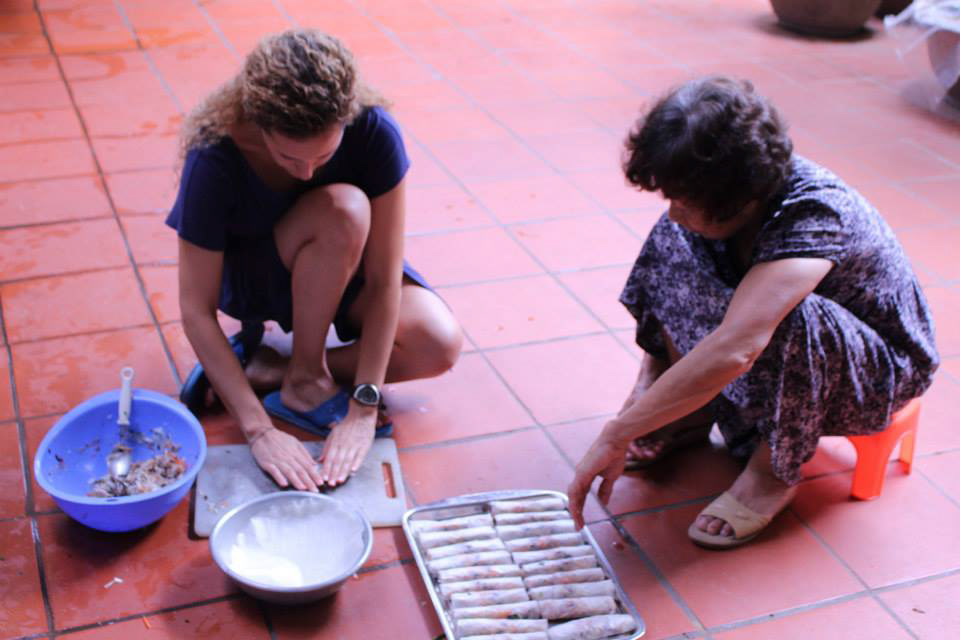
I decided to lead my own field research trip and travelled with a food researcher, someone I had met on one of my many work trips to Vietnam. Together we travelled the length of the country, eating, making and documenting rice paper dishes.
This body of research became an invaluable resource and helped to shape many aspects of the restaurant from menu and recipe development to interior design and the brand's look and feel.
We travelled to the depths of the countryside to meet some of the women who are still making rice paper by hand. Similar to making a french pancake, the circular pancake is cooked and gently laid on top of a woven stretcher to be then placed out in the sun to dry till crisp,


I was fortunate to spend time with some fantastic professional chefs and home chefs, learning from them how to select the freshest ingredients at the market and turning it into Vietnamese delicacies. Even though I knew my role was never destined to be in the kitchen, I learned a critical lesson through these experiences - a restaurant operator, despite not being the chef, needs to understand how every product is made. Only then can they really understand the needs of their staff, in terms of time, skill and equipment needs.
Business Plan
Solidifying the opportunity, I wrote a 30 page business plan while still living in Singapore and when complete, moved my life back to London to get started with, raising the capital needed and to find my key product maker, the most important person in the operation, the chef.
Deciding on the right London location was a big question and finding a restaurant property was challenging as a first-time restaurateur. After many months of knocking on doors and selling my vision to landlords, I managed to secure a property on Brick Lane, one of London's most famous streets in the heart of the old Jewish East End.
Location Scenarios The City of London versus East London (presentation)
Understanding The Challenges
Many challenges arise when designing a large restaurant operation. Two in particular tested my ability to think like a UX designer.
Operational Design
How do we design a restaurant operation that functions over 2 floors and caters to a passing takeaway trade as well as a dine-in customer. The space needs to be designed for a 12 hour trade and sell to the street on market days.
Product Marketing
A restaurant where you need to 'introduce' and 'educate' a market about a particular cuisine is a huge challenge. Thankfully, Vietnamese food had become better understood thanks to the success of new market entrants at the time, but FOLD's style of eating with rice paper was style little known.
The job to be done, was in considering how we introduce the concept of eating with rice paper and to inspire and excite consumers enough to try this new dining experience.
Challenge 1 - Operational Design
Restaurant Architecture
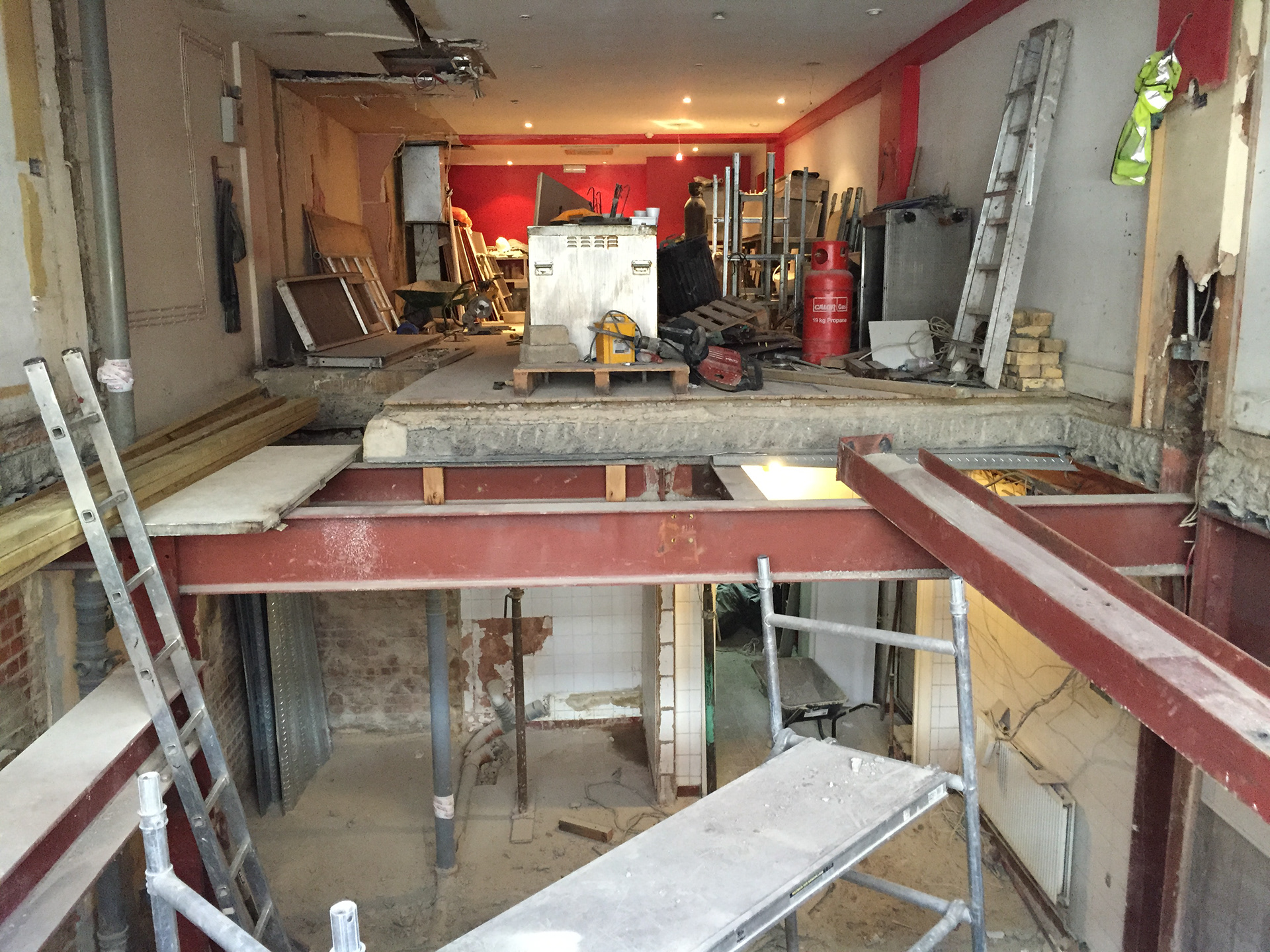
I worked with a firm of architects to design a space that would maximise dining capacity and allow diners and staff to comfortably flow throughout the space. We worked through many design iterations and finally landed on a design that would require a large demolition job in order to make the restaurant more accessible from street level as the entrance was slightly elevated.
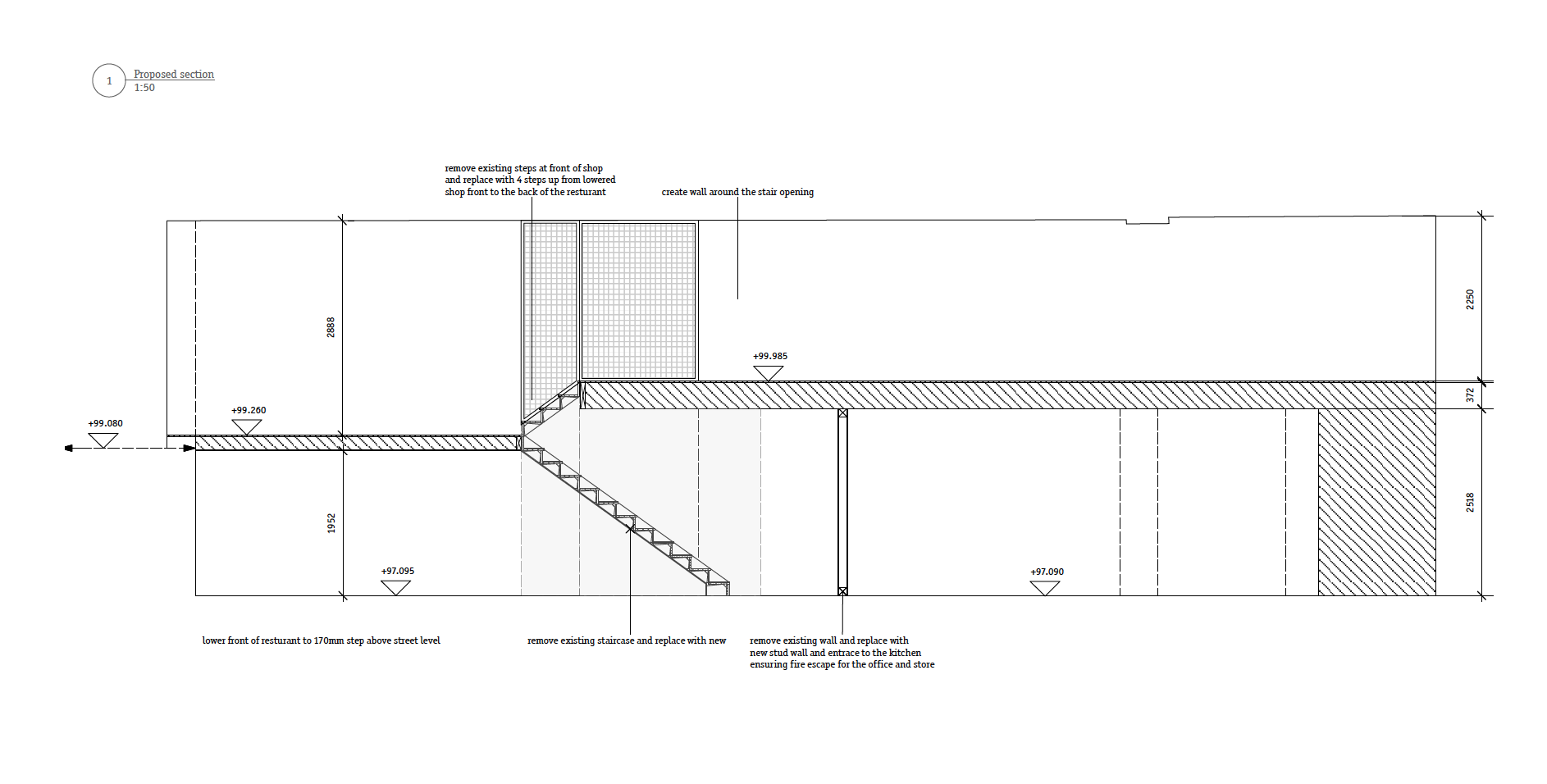
Cross section of the restaurant showing the street entrance on the left of the drawing. The floor was to be lowered to street level, a staircase to be flipped in direction to the basement and steps added leading diners to the dine-in area.
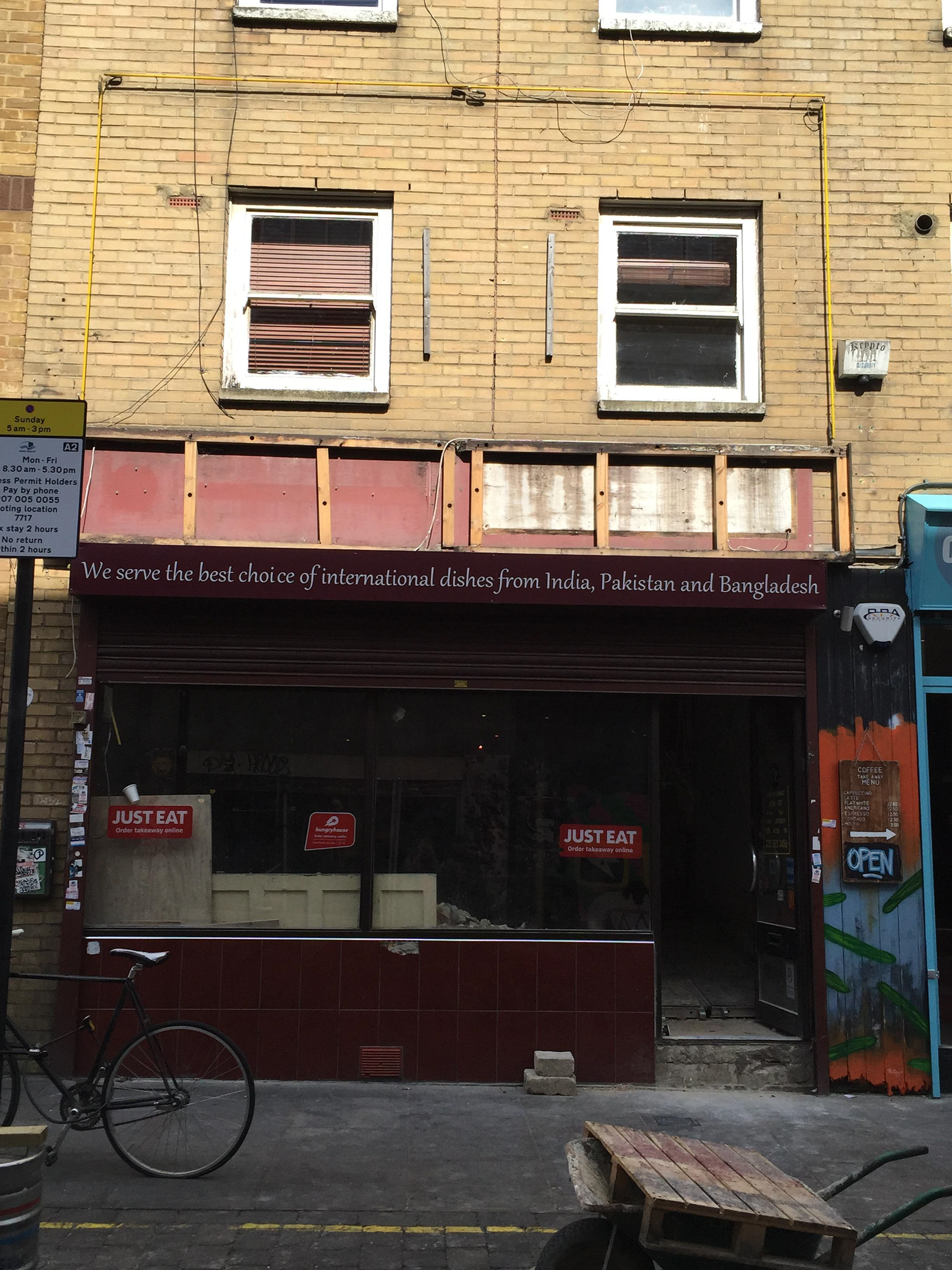
Old frontage of the restaurant visualising the stepped entrance.
Image taken from the entrance of the restuarant, highlighted the extent of the demolition job.
Interior Layout and Flow
A big design challenge was in deciding upon the best table layout for maximising the seating capacity. There were many considerations that had to be dealt with at this stage, including an oversized ventilation system that was taking up valuable dining space. and deciding whether it was cost-effective to have it replaced.
Another big consideration was in deciding how food would be brought to the table, via which of the 2 staircases in the restaurant, and whether the dumb waiter lift should be kept at the sacrifice of seating space.
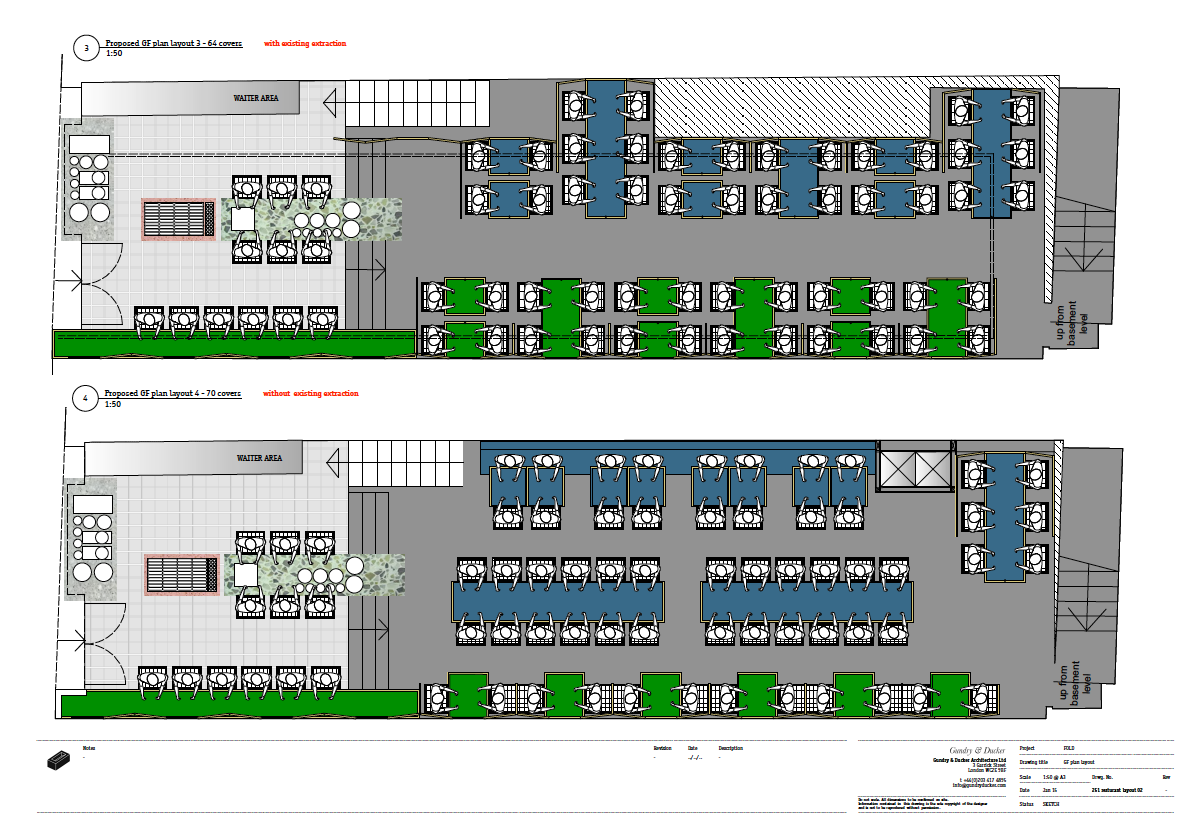
Two different table layout designs. The top design allowed for the old ventilation system to remain. The 2nd illustrates the ventilation removed giving increased seating space and added bussing area for dirty plates and waste. We went with an iteration of this 2nd design.
Restaurant User Interface
A restaurant has a huge number of touchpoints and similar to designing a digital user interface, each touchpoint needs to work on a functional, aesthetic, and brand level.
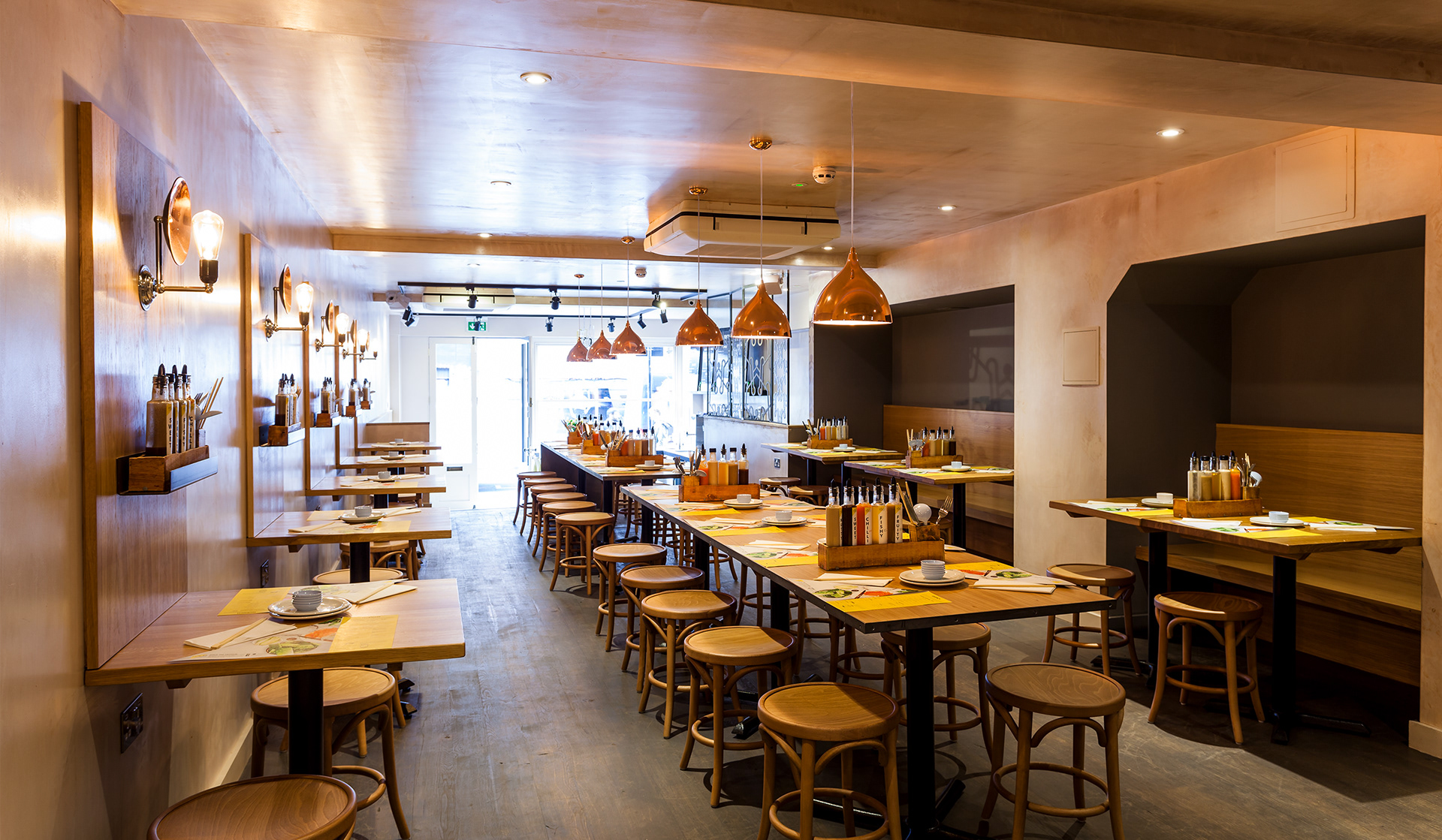
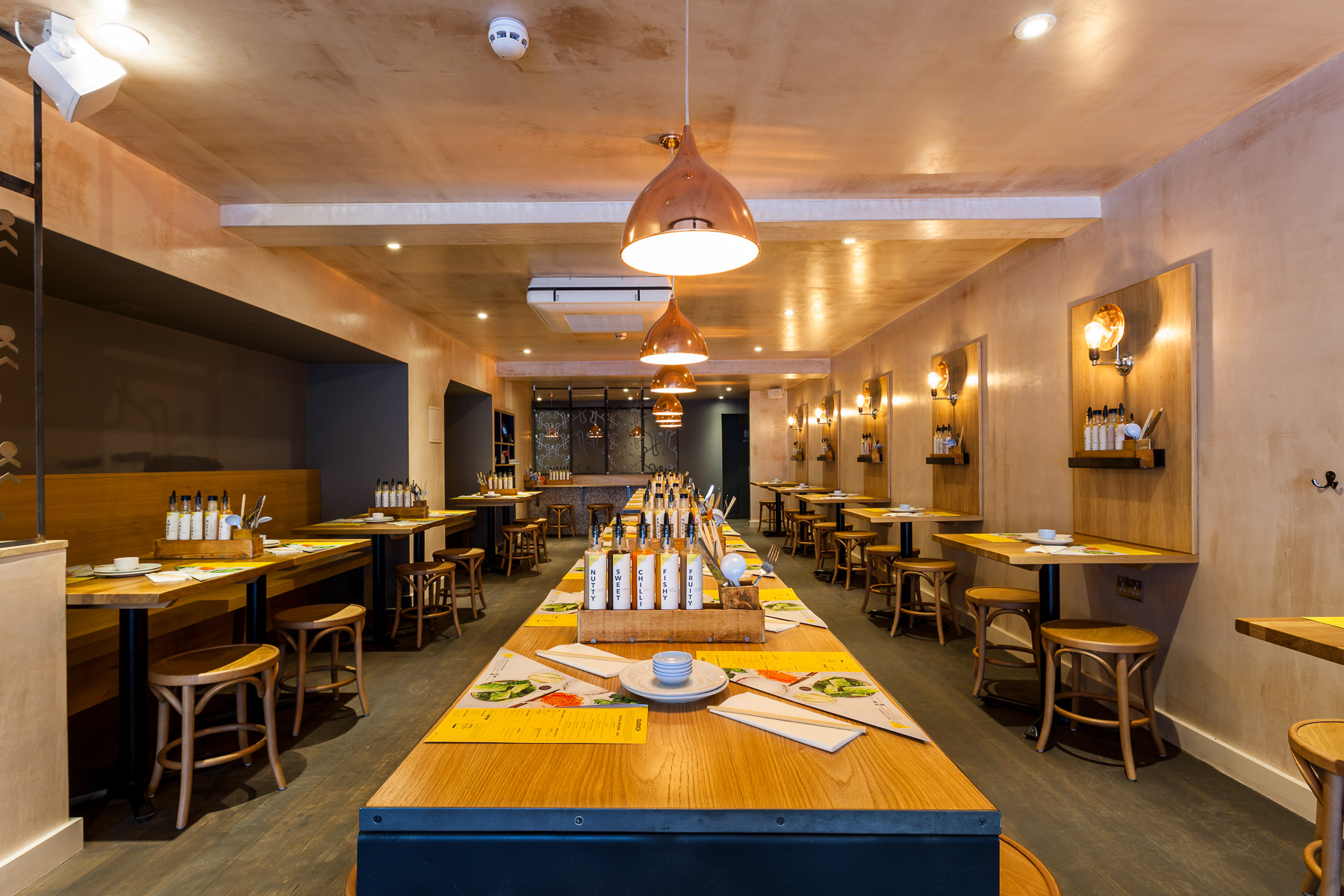
Some of the particularly detailed considerations included; selecting the right type and size of dining table, finding seating that was both comfortable and accommodated the limited space, lighting that would set the desired atmosphere, table accessories, condiments and on table marketing messages that would capitalize on a diner's dwell time.
Many of these UI details are illustrated in the following images:
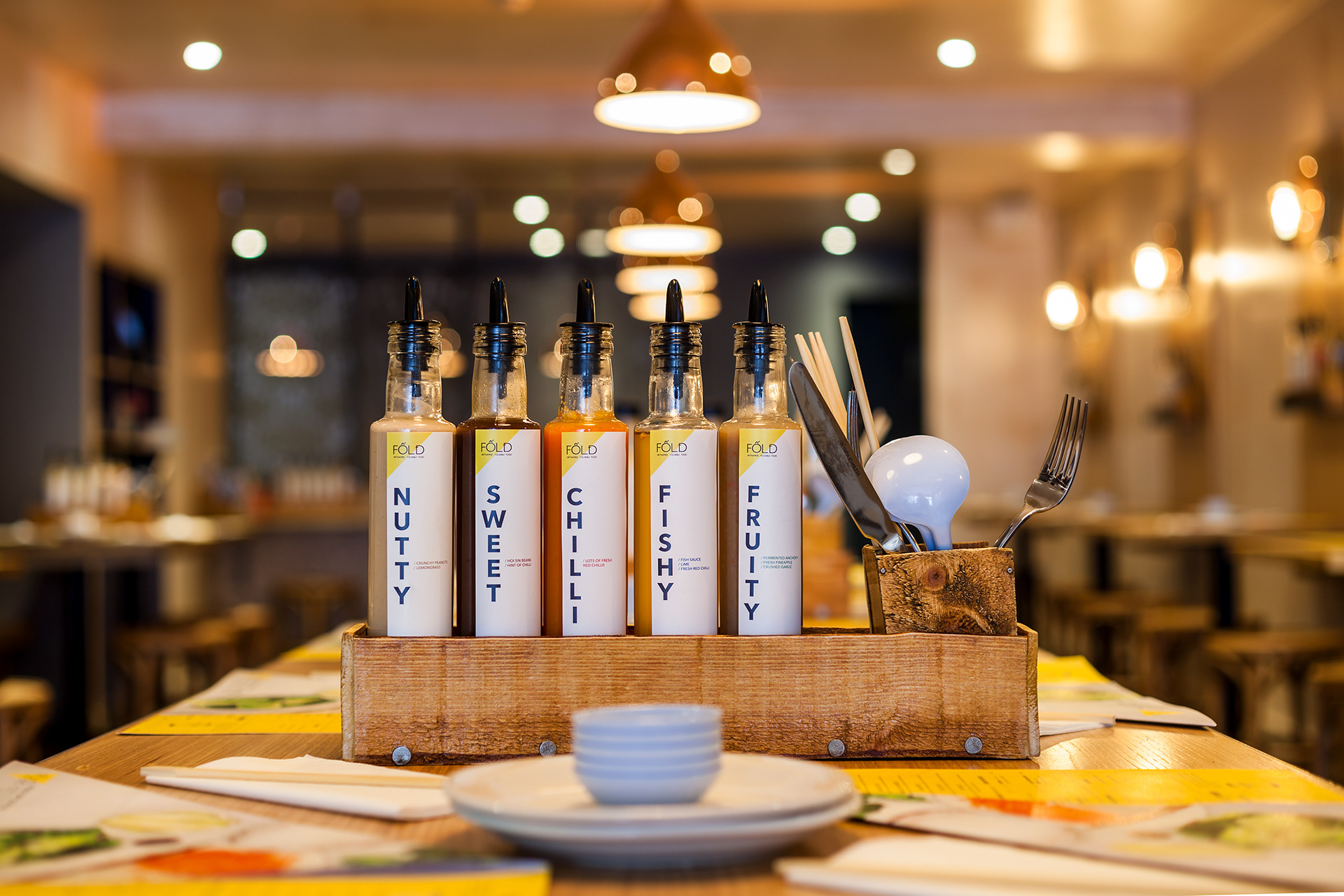
The table setting, included many component parts, each requiring considerable design thinking and planning.
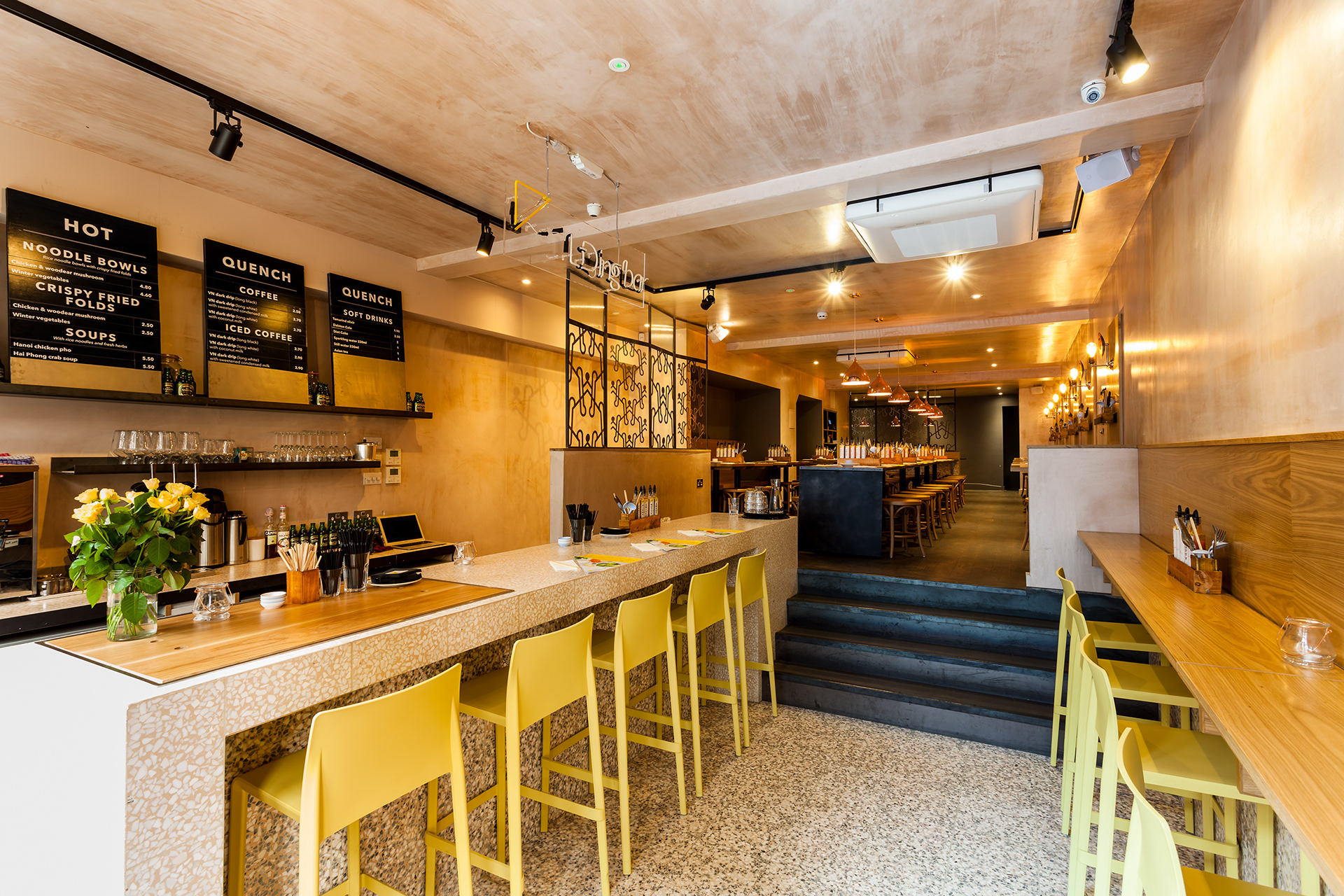
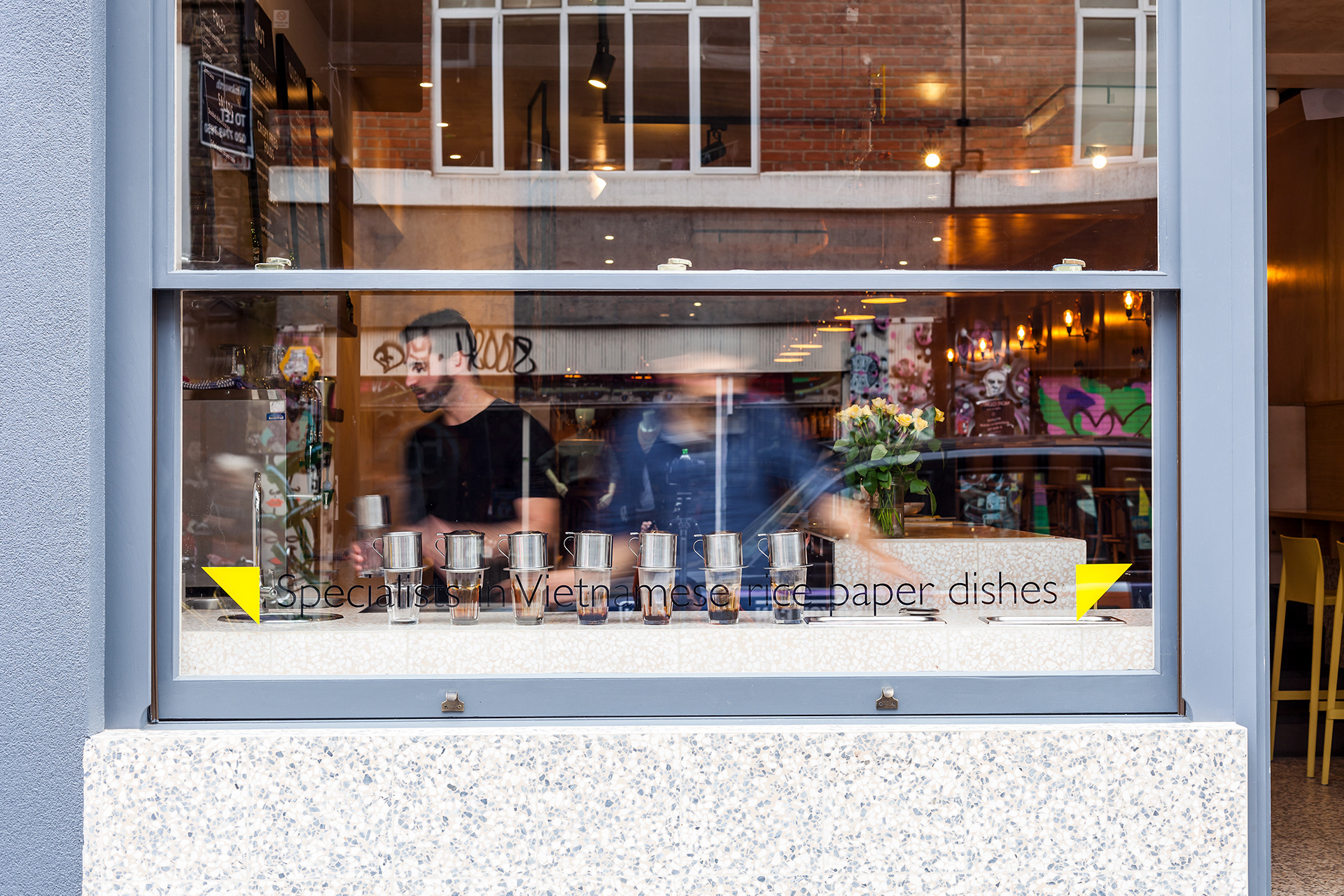
View of the front of the restaurant which served as a takeaway kiosk at lunchtime (the wooden plinth covers the refrigerated well that displayed cold food). By night, this area turned into a bar and dining table.
Challenge 2 - Product Marketing
Building the FOLD brand
As a marketer, one of the most satisfying aspects of building the restaurant was creating the FOLD brand. I had a clear idea as to what I wanted to achieve and created many a strategy document to get it right.
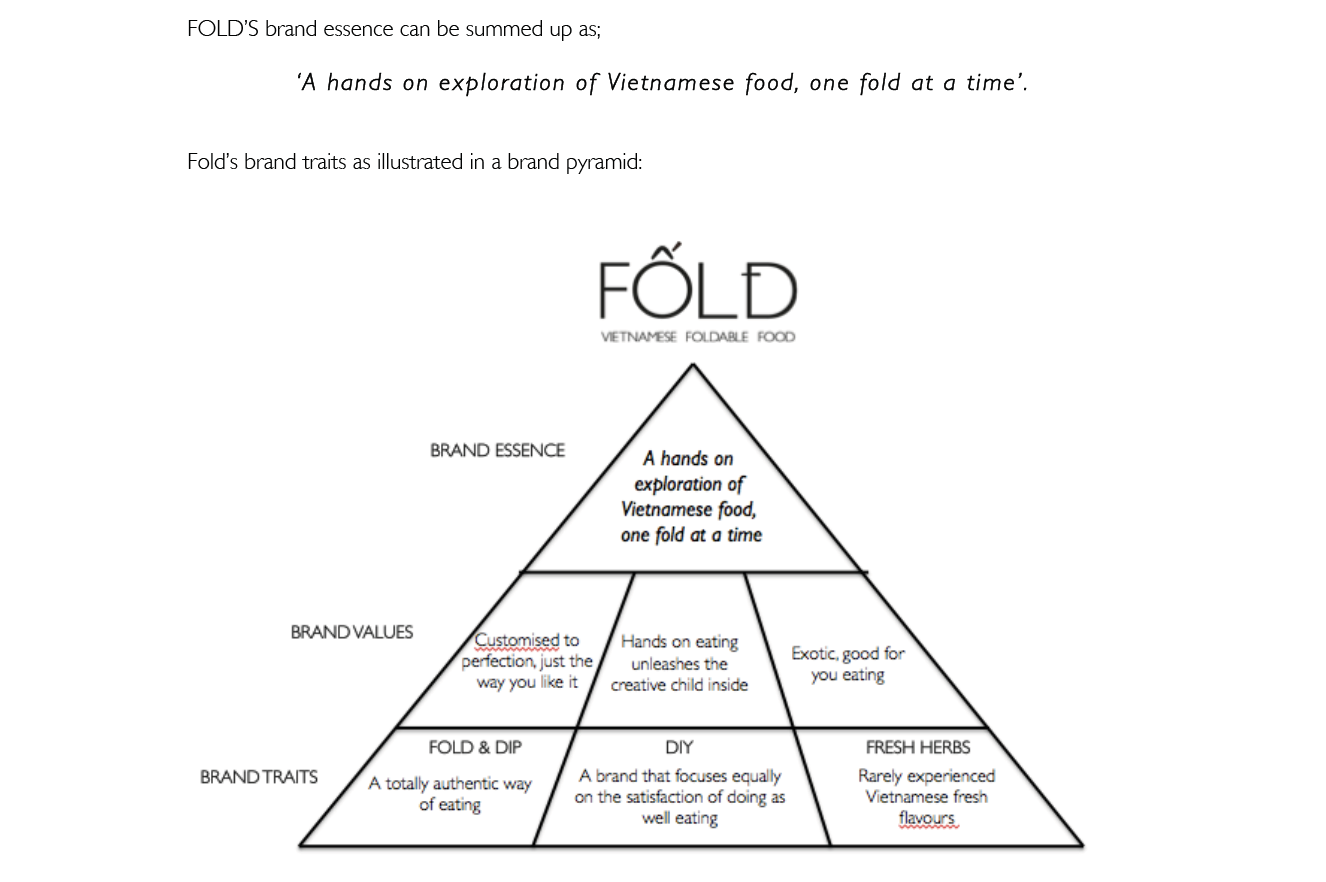
Brand pyramid extracted from the marketing and comms section of my business plan.
The Logo
My starting point for developing a visually distinct and own-able brand was creating the logo. I commissioned a graphic design graduate who had specialised in origami folding techniques in their final show. After a few iterations, we chose to progress with a simple, two-tone logo that imbued the concept of folding.
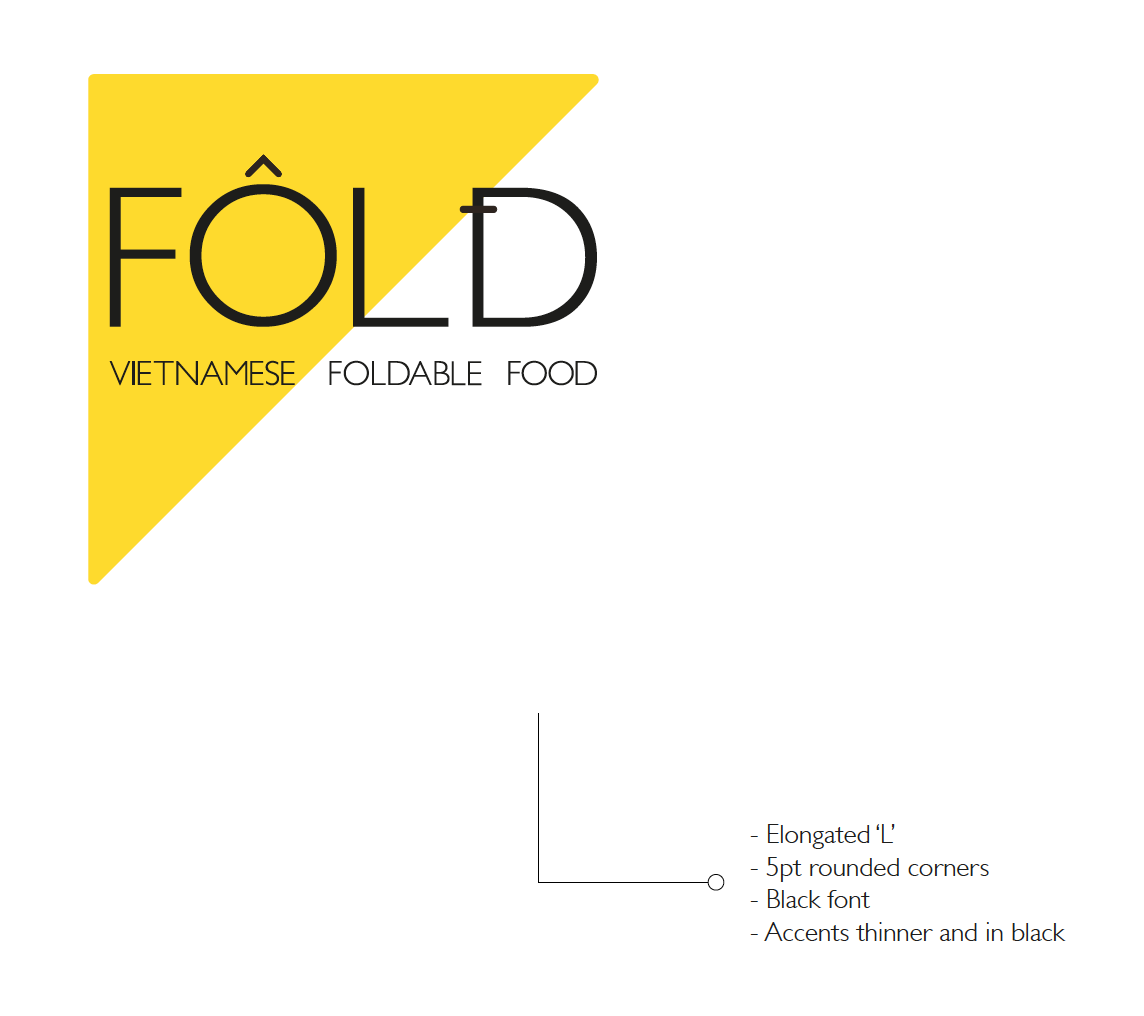
Colour Palette
FOLD's colour palette consisted of warm yellow, bluish-grey and touches of black, and was chosen to be distinct from the other restaurants in the market. The colour palette was supplemented with a set of material surfaces, including a custom blend terrazzo tiles (a material often used in Vietnam) that ran across the floor of the restaurant and up the front of the restaurant's facade.
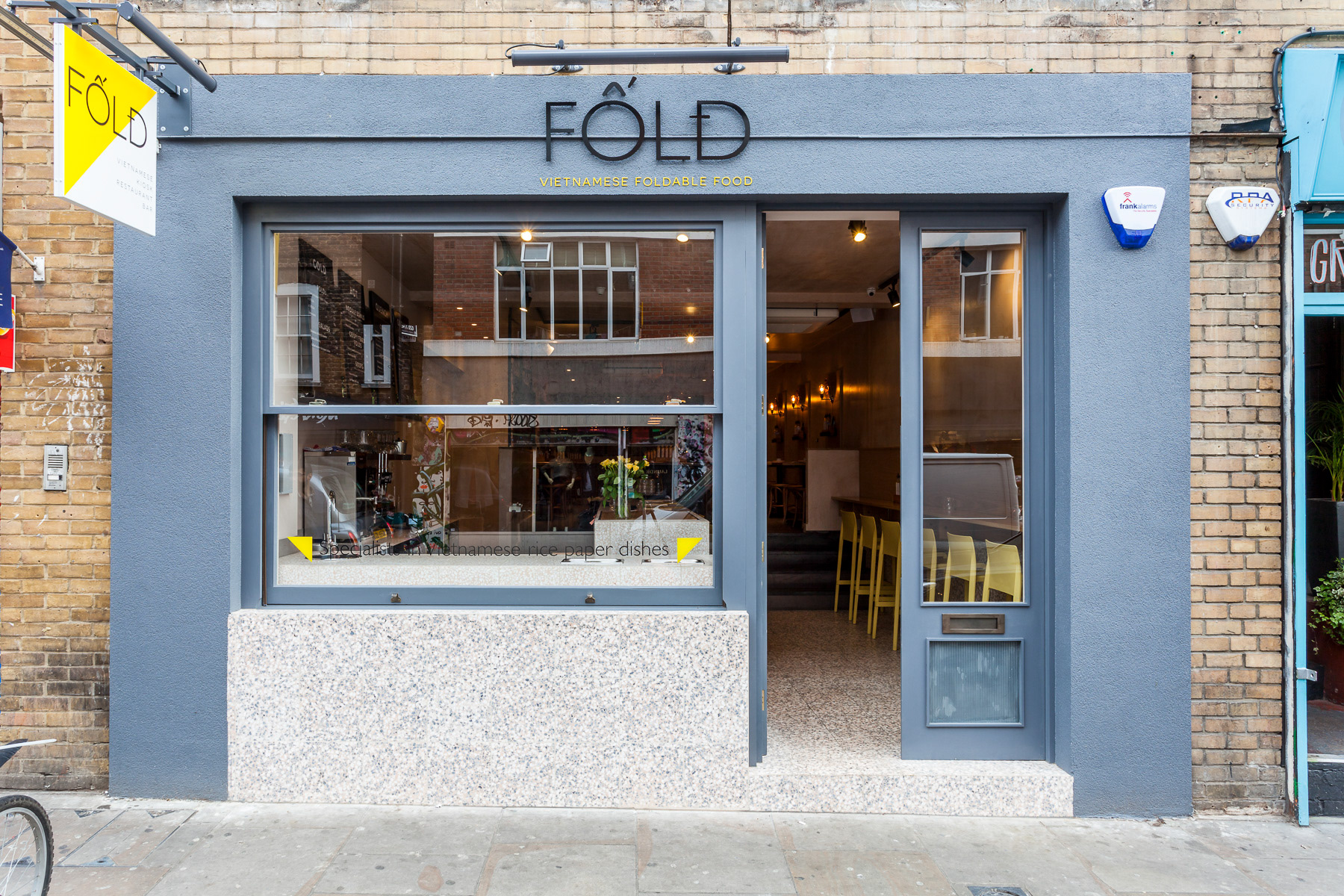
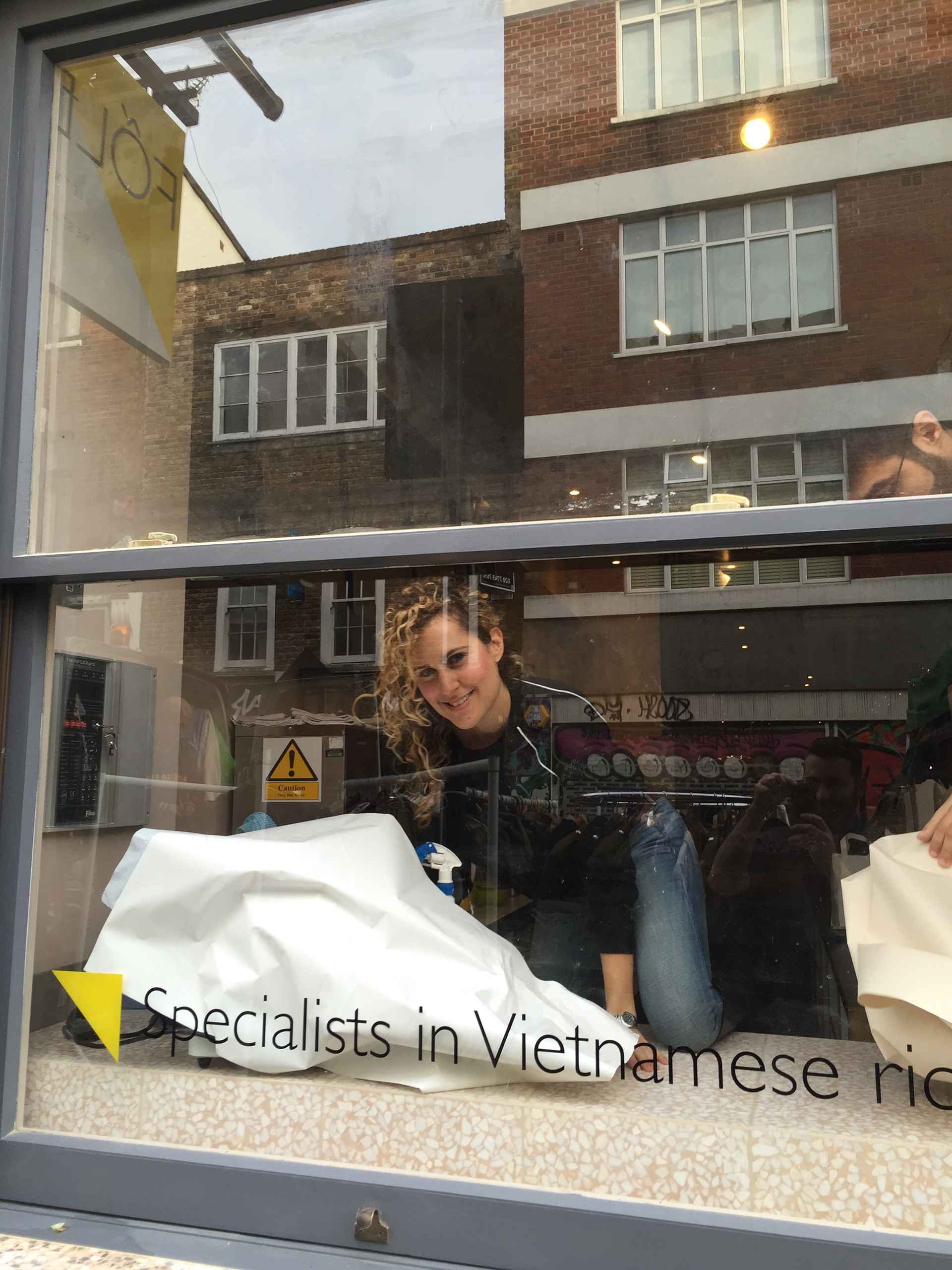
The terrazzo tile and hatch window was opened on Sundays allowing us to sell to consumers walking up Brick Lane on market day.
A Menu that Embodied the Brand
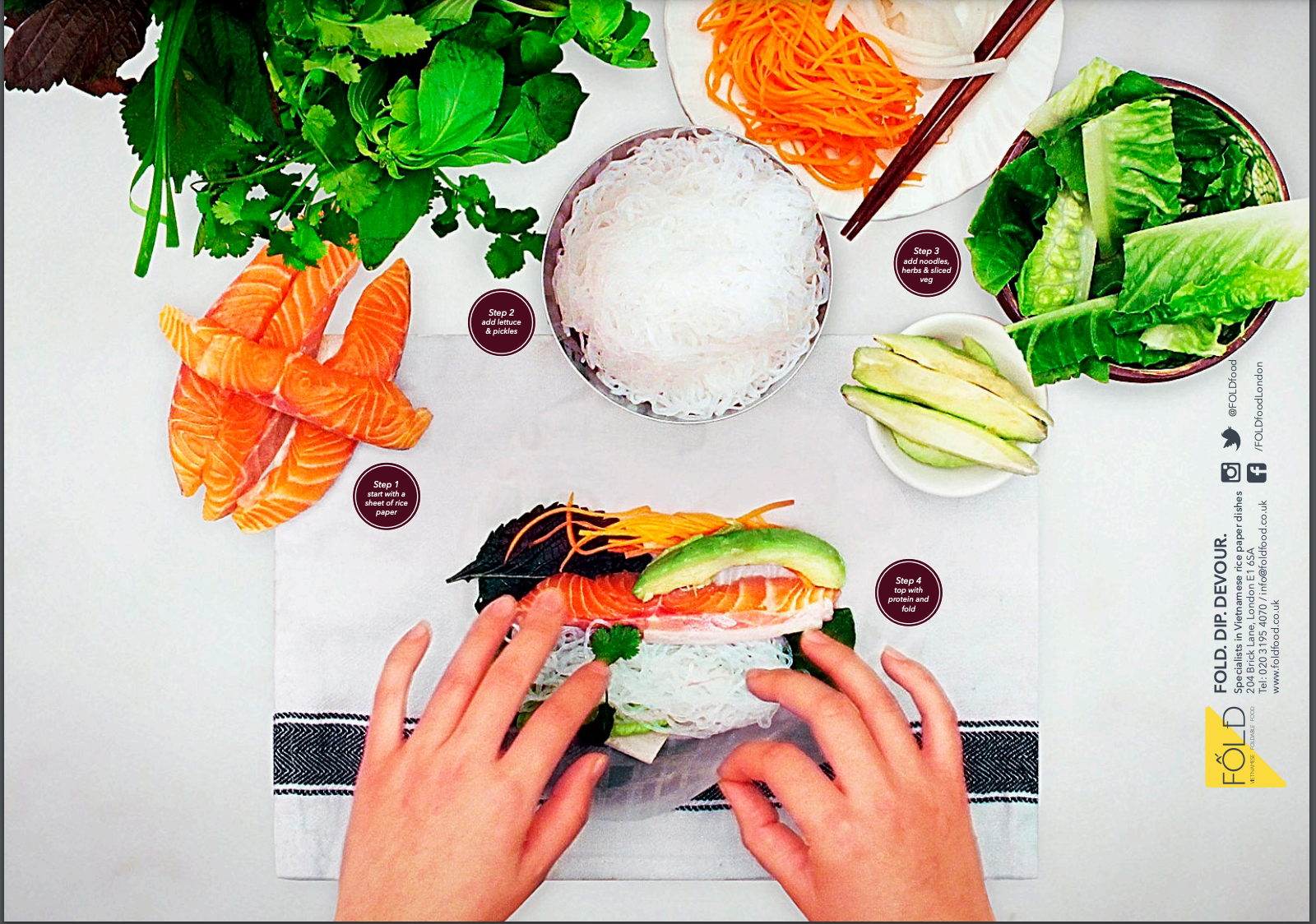
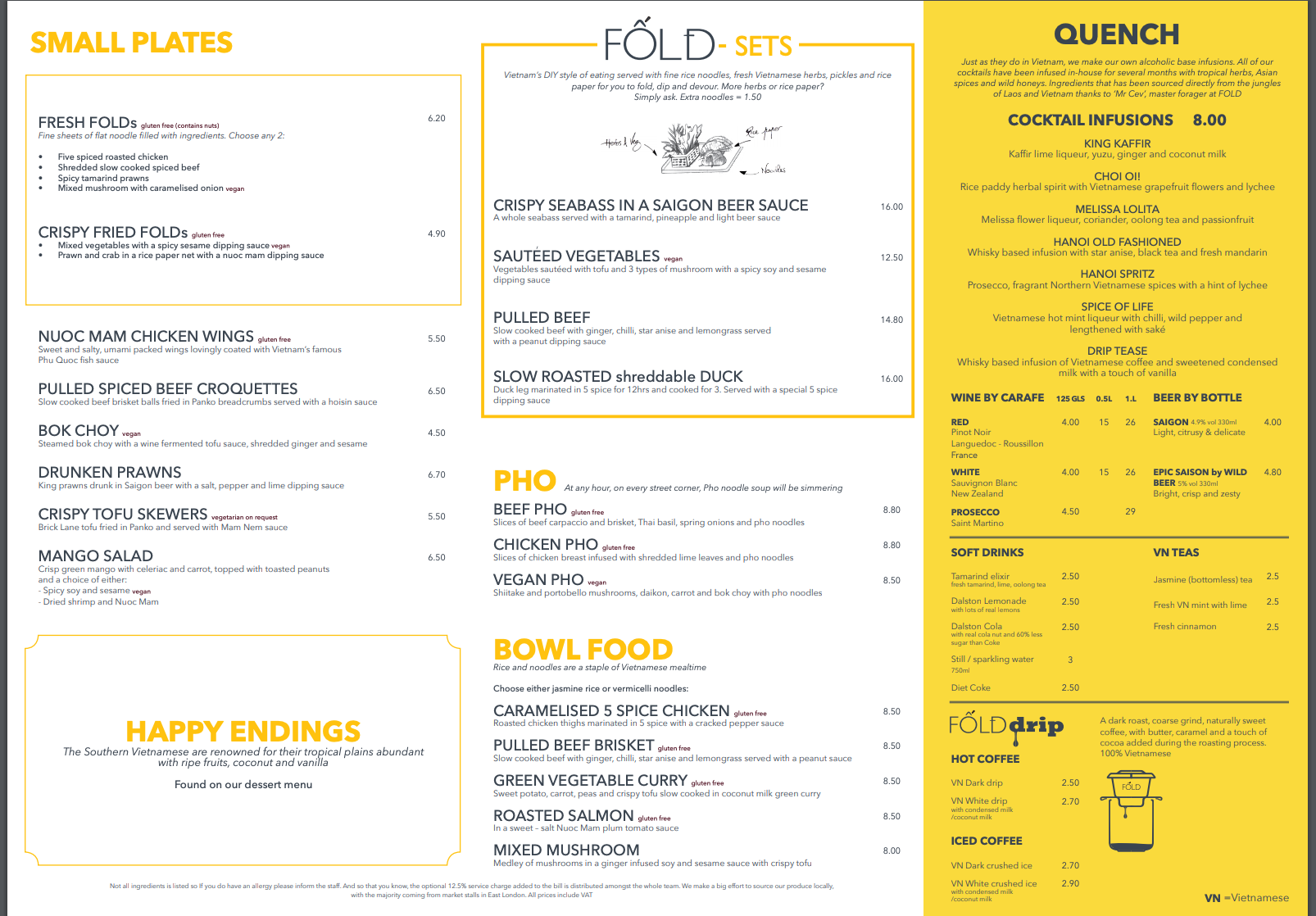
Two thirds of the menu was folded when closed, forcing the user to 'unfold' the flap in order to order. Not only did this design feature connect with the triangle shape in the FOLD logo but it created another touchpoint for us to communicate the folding nature of the brand. This playful mechanic was well liked by diners and the menu was often taken home as a souvenir.
The Website
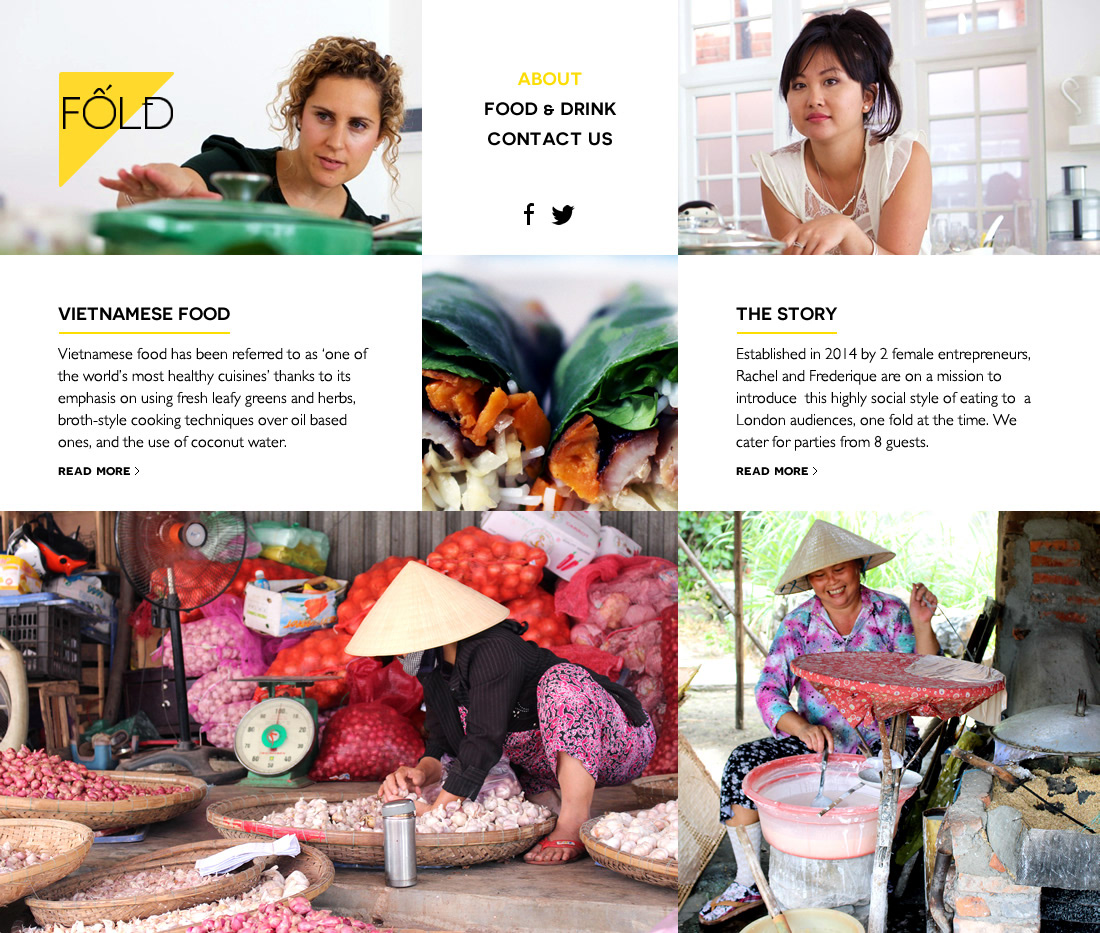
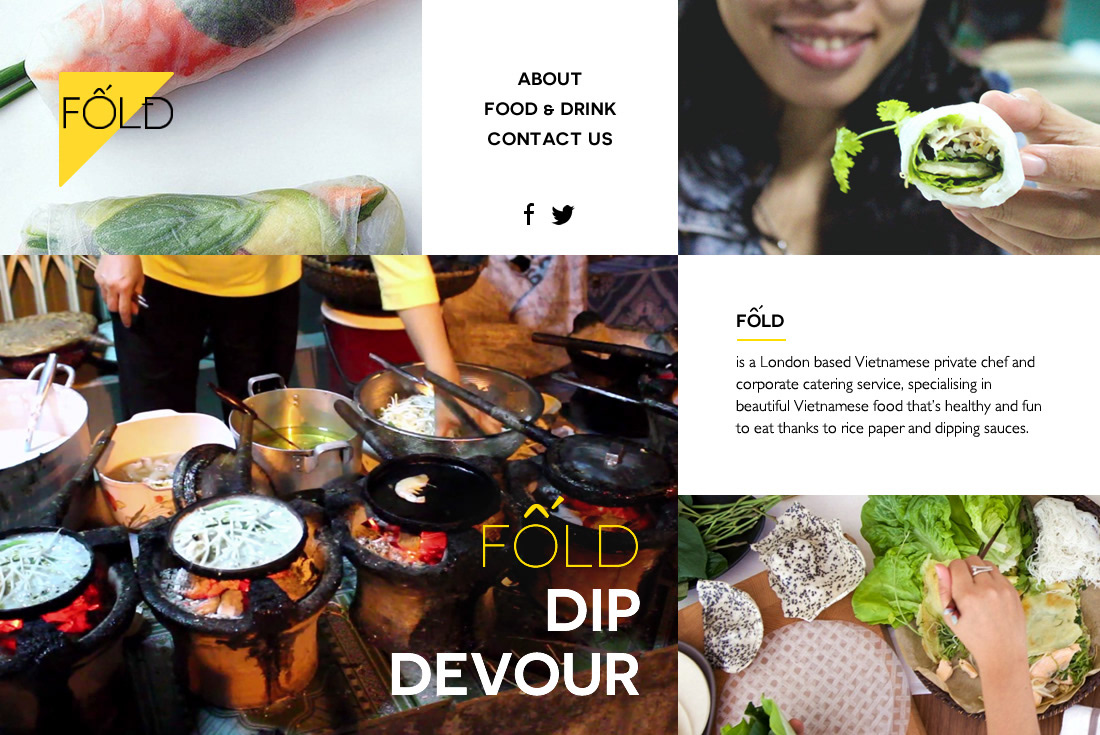
I worked with a web designer and developer in designing a simple 5 page website that firstly worked to promote our catering business, before having its content and messaging changed to support the restaurant and integrate a booking engine.
Marketing Collateral
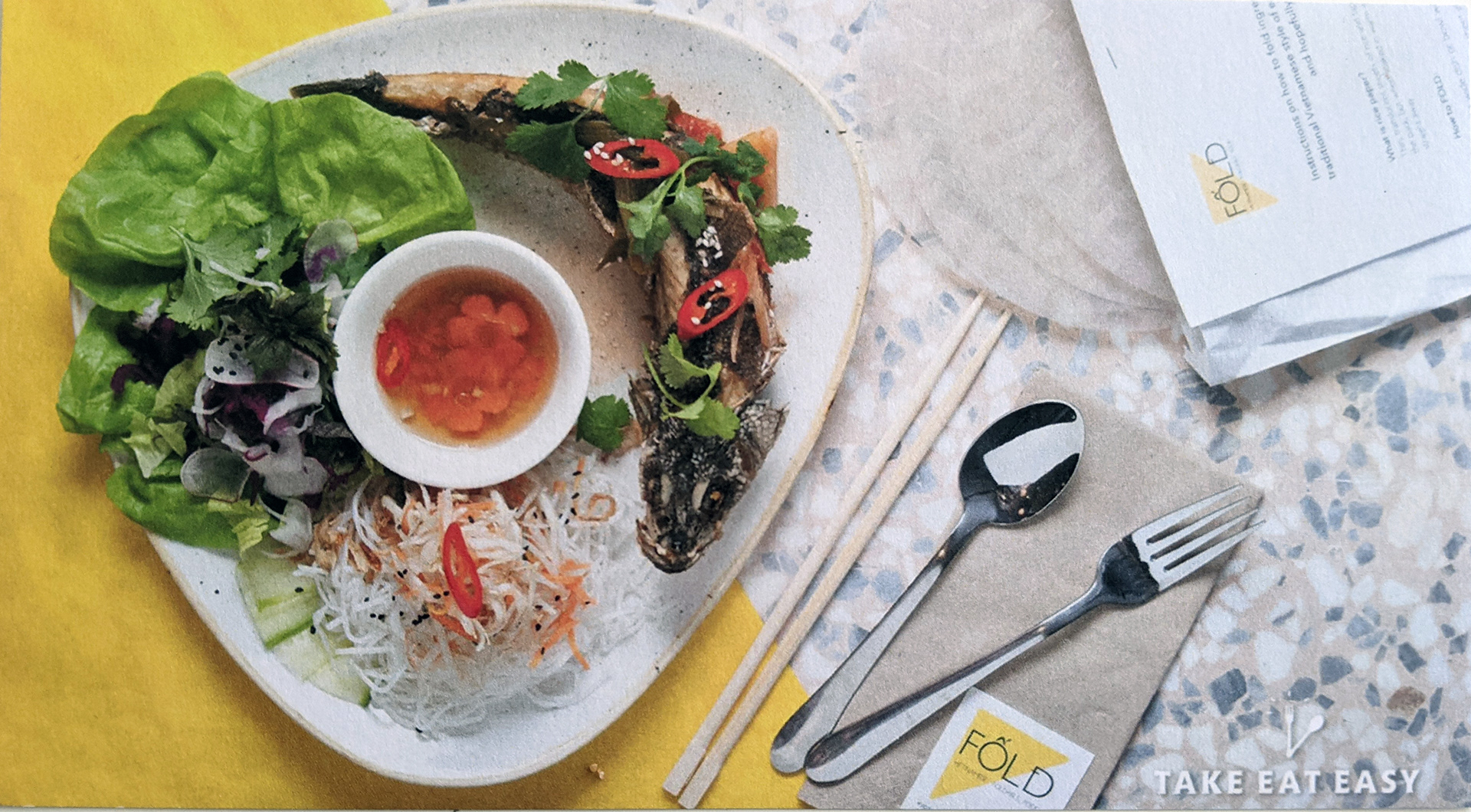
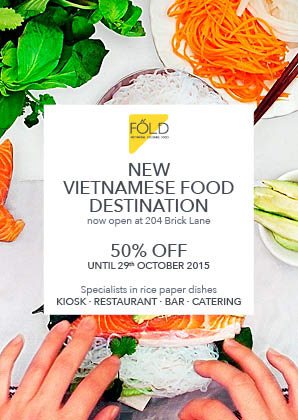
From promotional flyers, coffee cards, dipping sauce labels, info sheets on each of the edible herbs, I worked on a constant stream of artwork for print and digital some of which included the following:
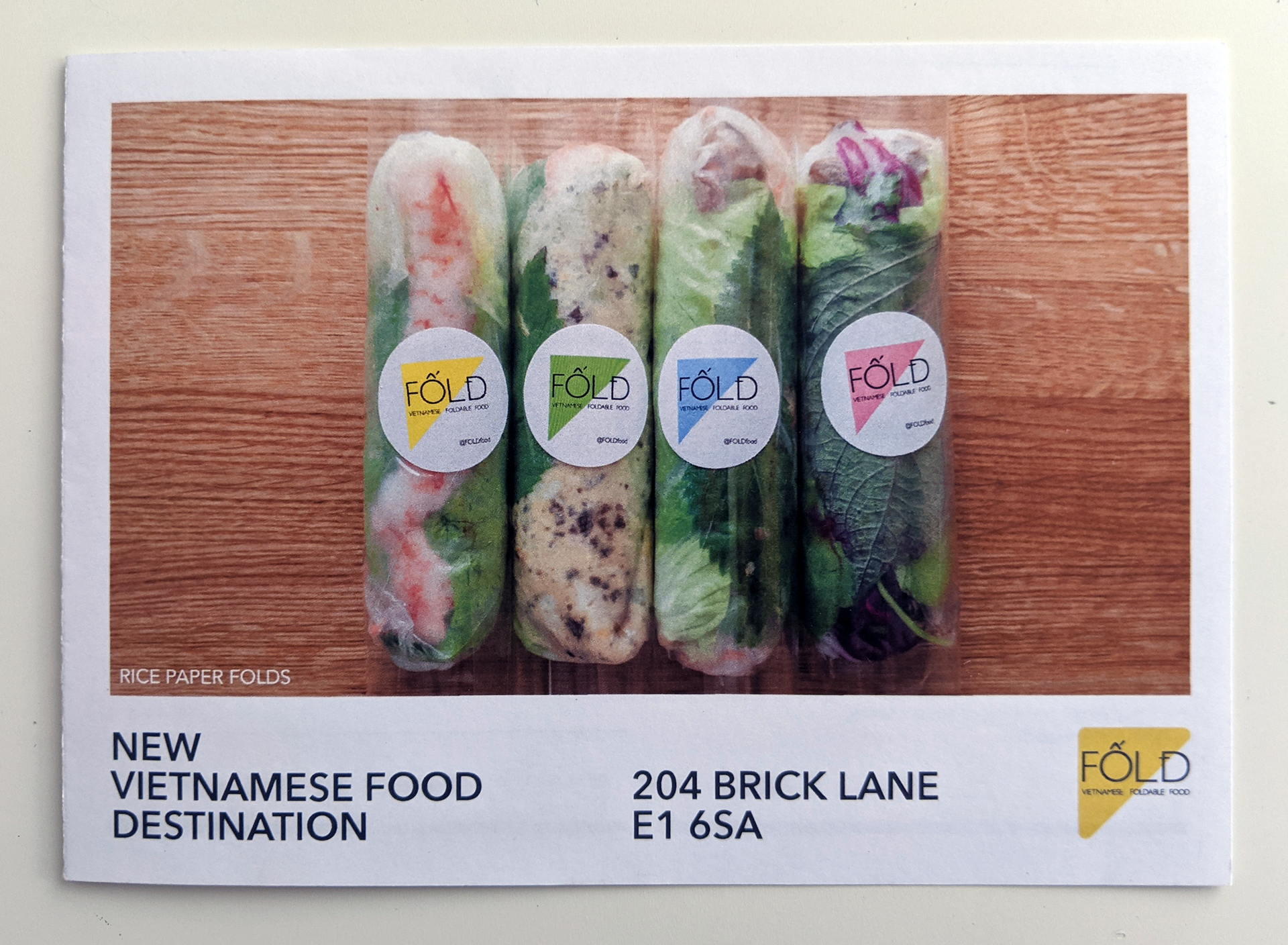
Lunchtime 'grab and go' takeaway menu
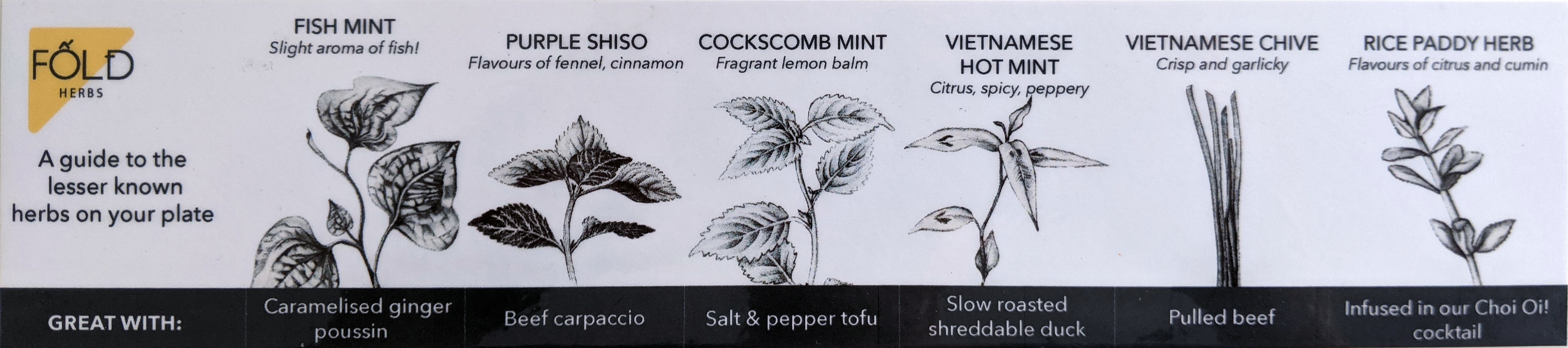
An illustrated guide to the 6 herbs, unique to Vietnam that we served. The guide was placed on every table and acted as a useful aid in educating and giving dish pairing suggestions. (illustrations drawn by my chef)
My Greatest Learnings
My experience of founding FOLD took me on an incredible journey of learning. Designing a service led business meant using the principles of a design thinking methodology throughout and in the process, equipped me with skills essential to making product led decisions.
It turned me into a decisive decision-maker and taught me that however much research and due diligence is conducted upfront, having contingencies built into a plan is essential in mitigating risk.
Above all, my greatest learning from designing a service led business, where the customer is assumed to always be right, is that you're dependant on their support. Without their patronage there is no business and with a big acceptance of this and a willingness to understand their every need, the sky can be the limit in terms of success!
After a great yet short run, FOLD was sold to a French restaurant group in 2016.